What Homeowners Should Know About Mold Remediation
Mold is something every homeowner dreads discovering, especially in the dry climate of Yuma, AZ. While it’s not always obvious or visible, mold can cause serious issues for your home and health if left unchecked. Mold remediation isn’t just about cleaning up what you see—it’s about solving the underlying problem and making sure it doesn’t come back. Here’s what homeowners should know about mold remediation and how the process works.
How Can I Tell If I Have a Mold Problem?
In many cases, mold hides out of sight, growing behind walls, under flooring, or in attics and crawlspaces. Common signs you might have a mold issue include:
- A musty, earthy smell that doesn’t go away
- Visible discoloration or staining on walls, ceilings, or floors
- Peeling paint, warped walls, or bubbling surfaces
- Recent water damage, leaks, or flooding
- Allergy-like symptoms that improve when you leave the house
Even if you don’t see mold, persistent dampness or a lingering smell after water damage can be a sign that mold is present behind the scenes.
Why Does Mold Grow in My Home?
Mold spores are everywhere, but they only become a problem when they have moisture and organic material to feed on. In Yuma, water damage from plumbing leaks, storms, or even high indoor humidity can create the right conditions for mold. Mold can take hold in as little as 24 to 48 hours after water exposure. That’s why it’s critical to dry out any wet areas quickly and keep humidity under control.
What Happens During Mold Remediation?
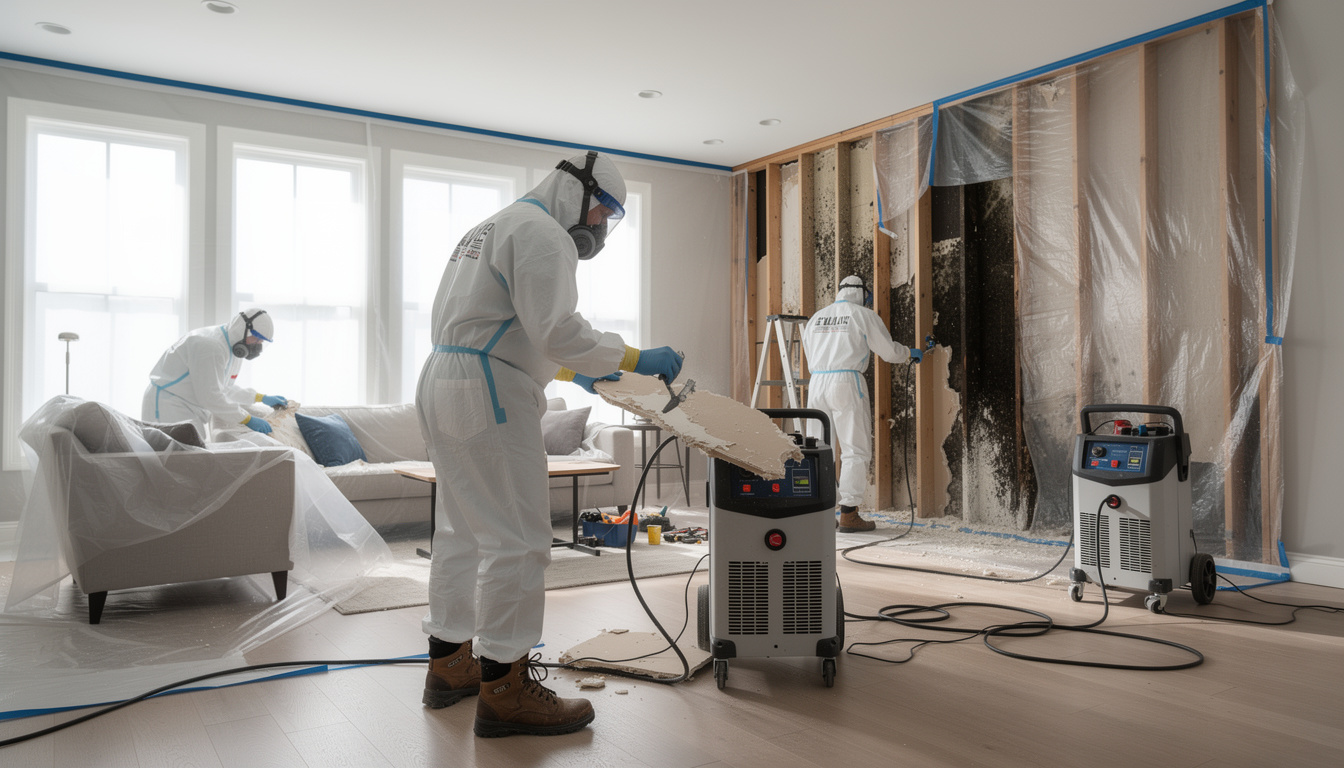
Mold remediation is more involved than just wiping away what you see. Here’s how a typical process might go:
- Assessment: The crew inspects the property to find all the areas affected by mold and moisture.
- Containment: Plastic sheeting and negative air pressure prevent spores from spreading to clean areas.
- Removal: Moldy building materials like drywall and insulation get carefully removed and bagged for disposal. Hard surfaces are cleaned and treated with antimicrobial agents.
- Drying: Industrial fans and dehumidifiers dry out the space, stopping mold from returning.
- Restoration: Damaged areas are rebuilt or refinished to their original condition.
For severe or hidden mold, specialized equipment like air scrubbers and HEPA vacuums may be necessary. If mold has affected your belongings, contents packout and storage services can protect what’s salvageable while cleanup is underway.
Is Mold Remediation Safe for My Family?
When handled by professionals, mold remediation is designed to keep you and your family safe. Crews use protective gear and containment barriers to avoid spreading spores. If large areas are affected, you may need to leave your home during the initial cleanup. Small jobs can often be done while you’re still at home, as long as you stay away from work zones. After remediation, air quality testing may be done to confirm the job is complete.
Can I Remove Mold Myself, or Should I Call a Pro?
For very small spots on hard surfaces, you might be able to clean up mold yourself with soap and water or a mild cleaner. But if you have a large area—anything more than about 10 square feet—visible water damage, or mold growing on porous materials like drywall or carpet, it’s best to call a professional. Mold can spread during DIY cleanup, and there’s a risk of missing hidden growth. Certified crews have the tools and experience to get rid of the mold and fix the underlying moisture problem, especially in tricky or hazardous situations like asbestos or meth contamination, which sometimes overlap with mold issues.
How Can I Prevent Mold from Returning?
After remediation, the most important thing is to control moisture in your home. Here are some practical steps:
- Fix leaks in roofs, walls, and plumbing right away
- Keep gutters and downspouts clear and directed away from the foundation
- Use exhaust fans in bathrooms, kitchens, and laundry areas
- Maintain indoor humidity below 60%, ideally 30-50%
- Inspect your home regularly for damp spots or musty smells
Regular maintenance is key in areas like Yuma, where dust storms or monsoon rains can quickly lead to water intrusion.
Frequently Asked Questions
How long does mold remediation take?
The timeline depends on the size of the affected area and how much material needs to be removed. Small jobs might be finished in a day or two, while more extensive work—especially if reconstruction is needed—can take a week or more.
Will cleaning with bleach get rid of mold?
Bleach can kill surface mold on hard, non-porous surfaces, but it doesn’t penetrate porous materials like drywall or wood. That means the root structure of the mold can survive and grow back. Professional removal is the best way to get rid of mold for good.
Is mold dangerous to my health?
Some molds can trigger allergies, asthma, or other respiratory problems, especially in children, the elderly, or anyone with a weakened immune system. Certain types of mold produce toxins, but even common household molds are best removed promptly for your family’s comfort and safety.
Will my insurance cover mold remediation?
Insurance coverage depends on the cause of the mold and your specific policy. Usually, mold from a sudden, accidental water event (like a burst pipe) may be covered, but long-term issues from neglect or maintenance problems may not be. Check with your insurance provider for details.
If you suspect a mold problem in your Yuma area home, don’t wait—addressing it early can save you time, money, and headaches down the road. For trusted help with inspection, removal, and restoration, reach out to Mint Restoration. We’re ready to help you get your home back to normal.
